Skip to content
UÇKHistory and Memory
The UÇK emblem on a dark background, with the Albanian inscription “Drejtësi për UÇK” (Justice for the UÇK) on a red band and the words “Archive · History · Evidence” in Albanian.

Freedom has a history.History has evidence.

A digital archive documenting the Kosovo War, Albanian resistance and the Kosovo Liberation Army — built upon documents, research, testimonies and verifiable sources.

Justice / Case

LIVE

First-instance judgment

Thaçi, Veseli, Selimi and Krasniqi: what the court decided

On 16 September 2026 Trial Panel II of the Kosovo Specialist Chambers found Hashim Thaçi, Kadri Veseli, Rexhep Selimi and Jakup Krasniqi guilty of war crimes and not guilty of crimes against humanity. The judgment is not final.

Path of the case

Stage 4 of 6: First instance

  1. Investigation
  2. Indictment
  3. Trial
  4. First instance
  5. Appeal
  6. Final

Stage 4 of 6: First instance

Not finalThis is a first-instance judgment.

The judgment can be appealed.

Sentences imposed

4 convicted at first instance

None of these sentences is final: the judgment can be appealed.

Full case page

Archive

Time, places and justice

Three ways into the archive's material: by year, by place and by court case.

Chronology

Year by year

Full chronology

Map

The places where history happened

Open the full map

Showing 48 places

Swipe the cards or tap a marker on the map.

  • Open the record
  • Open the record
  • Open the record
  • Open the record
  • Open the record
  • Open the record
  • Open the record
  • Open the record
  • Open the record
  • Open the record
  • Open the record
  • Open the record
  • Open the record
  • Open the record
  • Open the record
  • Open the record
  • Open the record
  • Open the record
  • Open the record
  • Open the record
  • Open the record
  • Open the record
  • Open the record
  • Open the record
  • Open the record
  • Open the record
  • Open the record
  • Open the record
  • Open the record
  • Open the record
  • Open the record
  • Open the record
  • Open the record
  • Open the record
  • Open the record
  • Open the record
  • Open the record
  • Battles
  • Massacres and crimes
  • Prisons and detention sites
  • Refugee routes
  • Diplomacy
  • Operational zones
  • Memorials

Operational zones are shown only with an approximate reference point. Their boundaries are not drawn, because we have no verified cartographic data.

Refugee lines are schematic: they connect documented places but do not show the exact route taken.

Marked places (non-map alternative)

Marked places (non-map alternative)

Showing 48 places

Justice

Court cases

All cases

Remembrance

Names are not numbers.

Behind every figure is a life, a name and a family that still remembers. This archive does not reproduce unverified lists of victims: it links to projects that have documented names with a public methodology, and prepares the infrastructure for verified, properly licensed imports.

Memorial profiles based on the cited sources. Lists of victims are published only by the projects that documented them with a public methodology.

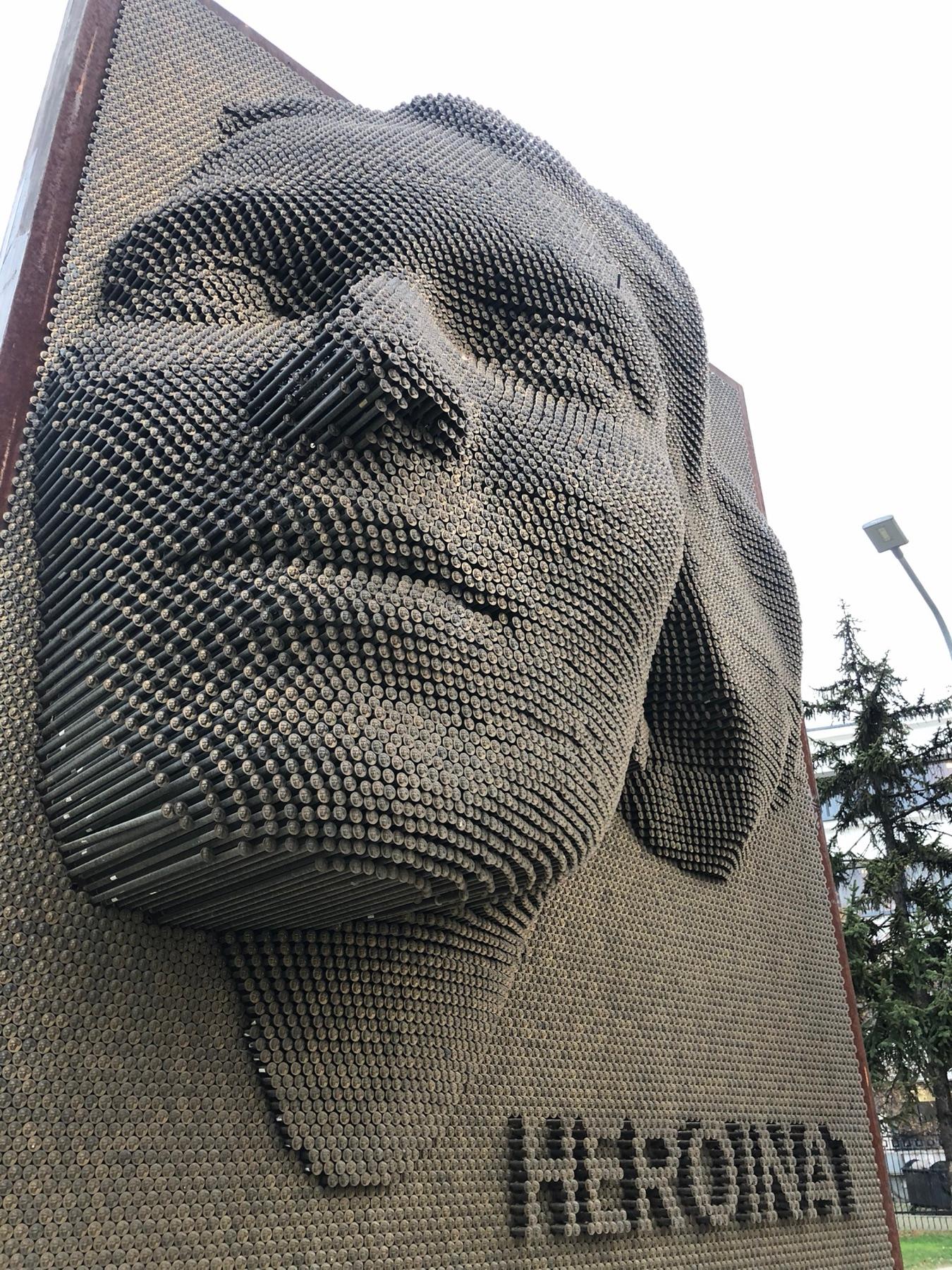
A relief portrait of a woman made of thousands of metal medals
Photo: Mooonswimmer (përdorues i Wikimedia Commons); memoriali: Ilir Blakçori · Fotoja: 6 dhjetor 2022 · CC BY-SA 4.0 (foto); liria e panoramës sipas ligjit të Kosovës për të drejtën e autorit

Chapters of the history

From autonomy to war — and after

Seven periods, each with its own dates, people, places, sources and open questions. The postwar period is treated separately from the armed conflict of 1998–1999.
  1. 01

    Before 1981

    Kosovo within Yugoslavia: the roots of the crisis

  2. 02

    1981–1989

    From the 1981 demonstrations to the abolition of autonomy

  3. 03

    1989–1995

    The parallel state and peaceful resistance

  4. 04

    1996–1997

    The crisis of peaceful resistance and the KLA's first public appearance

  5. 05

    1998

    1998: from Drenica to open war

  6. 06

    1999

    1999: Reçak, expulsions and the end of the war

  7. June 1999 — the end of the war

    07

    The postwar period and legacy

    After the war: justice, the missing and memory

How to read the labels

Every important claim carries one of these labels. They show how certain the knowledge is and where it comes from.

How we work
Evidence status: Judicially established. Established in a final court judgment. It covers only what the court found, not every later interpretation.
A court has established it in a final judgment.
Established in a final court judgment. It covers only what the court found, not every later interpretation.
Evidence status: Documented. Supported by contemporaneous documents, institutional reports or independent studies that corroborate one another.
Independent documents and reports support it.
Supported by contemporaneous documents, institutional reports or independent studies that corroborate one another.
Evidence status: Personal testimony. An account by a witness or participant. Valuable as lived experience; factual details are compared with other sources.
An account from someone who lived through it.
An account by a witness or participant. Valuable as lived experience; factual details are compared with other sources.
Evidence status: Disputed. Serious sources give different versions, figures or interpretations. The positions and their reasons are set out.
Sources disagree; every position is shown.
Serious sources give different versions, figures or interpretations. The positions and their reasons are set out.
Evidence status: Historical interpretation. Analysis or assessment by researchers: an argued reading of the sources, not a single fact.
An assessment by scholars, not a single fact.
Analysis or assessment by researchers: an argued reading of the sources, not a single fact.
Symbols
Each label has its own shape — square, circle, half circle, diamond, triangle — so it can be told apart without colour. Hover over or focus a label for its explanation.

Research

Questions that need more than one answer

People and voices

History belongs to the people who lived it

Every profile states the sources it is built on. Where no verified quotation exists, we give an editorial summary — never invented first-person speech.

Selected profiles

Testimonies

Methodology

How we know what we write

Every text in this archive follows the same rules. Here is how we handle the hardest questions.
  1. 01

    Sources

    Every significant claim is linked to one or more identified sources. For each source we record its type, author or institution, date, language, means of access and the function it serves as evidence.

  2. 02

    Conflicting evidence

    When serious sources disagree, we do not quietly choose the most convenient version. The positions are set out side by side, with their sources and reasoning, and the claim is labelled “Disputed”.

  3. 03

    Court findings

    Court decisions are presented with their exact procedural status. An indictment is not proof of guilt, and a first-instance judgment is not final while an appeal is possible or pending.

  4. 04

    Uncertainty: dates, places and figures

    Uncertainty is not hidden behind confident wording. Approximate dates, approximate coordinates and figures that vary by source are labelled as such, with the relevant source and definition.

Contribute

Help us complete the archive

Families, witnesses, researchers and translators hold parts of this history that no library has. Every contribution is reviewed by the editors before anything is published.
All the ways to contribute

Nothing is published automatically. Every submission is reviewed by the editors, checked against sources, and may be declined or published in part.

Archive newsletter

Occasional updates on new research, significant corrections and newly added documents. No advertising.