
The remembrance space
Names are not numbers.
Names
Memorial profiles
The memorial profiles in this archive, each built on cited sources. Search by name; the search also accepts spelling without ë and ç.
The archive has a ready schema for memorial records (name, dates of birth and of death or disappearance, place, source, licence, family consent). Imports happen only under a licensing agreement and with accurate attribution.
- Adem JashariKLA members · CommandersAdem Jashari of Lower Prekaz (Prekaz i Poshtëm) in the Drenica region was one of the early figures of Albanian armed resistance in Kosovo and became a central symbol of the KLA (UÇK). During the 1990s his family resisted several attempts by Serbian police to arrest him. On 5–7 March 1998 Serbian special police forces attacked the family compound in Prekaz; Adem Jashari was killed together with dozens of members of his family, including women and children. The attack accelerated the spread of the armed uprising.Open profile
- Jusuf GërvallaPolitical leaders · JournalistsJusuf Gërvalla was an Albanian poet, journalist and political activist from Kosovo who, in exile in Germany, became involved in organizing underground groups seeking republic status for Kosovo and the unification of Albanians. On 17 January 1982 he, his brother Bardhosh Gërvalla and Kadri Zeka were killed near Stuttgart. The killing became a turning point for the émigré networks from which the People's Movement for the Republic of Kosovo later emerged.Open profile
- Kadri ZekaPolitical leadersKadri Zeka was an Albanian political activist from the Gjilan region, involved in the student movement and later in the political organization of the Albanian diaspora in Switzerland and Germany. On 17 January 1982 he was killed near Stuttgart together with the brothers Jusuf and Bardhosh Gërvalla. His name became part of the memory of the political movements of the 1980s; the public university in Gjilan bears his name today.Open profile
- Fehmi AganiPolitical leaders · Researchers · EducatorsFehmi Agani was a sociologist, a professor at the University of Prishtina and one of the most influential intellectuals and political strategists of the Democratic League of Kosovo. He took part in the talks on the 1996 education agreement and was a member of the Kosovo Albanian delegation at Rambouillet in 1999. He was killed in May 1999, during the NATO campaign, after being stopped while trying to leave Prishtina.Open profile
- Bajram KelmendiHuman-rights defenders · CiviliansBajram Kelmendi was a lawyer from Prishtina, known for defending Albanian political prisoners and for documenting human-rights violations in the 1990s. On the night of 24–25 March 1999, as the NATO air campaign began, he and his two sons were taken from their home; their bodies were found on 26 March 1999. The exact date of death has not been established. Their killing became one of the best-known cases documented by human-rights organizations from the start of the campaign of violence in Prishtina.Open profile
Verified sources on the victims
Names and numbers of victims come from projects with a published methodology. This archive links to them; it does not copy them.
Kosovo Memory Book
Fondi për të Drejtën Humanitare (HLC, Beograd) dhe Fondi për të Drejtën Humanitare Kosovë
Metadata verified
Open in the source archive(opens in a new tab)Evaluation of the Database of the Kosovo Memory Book
Human Rights Data Analysis Group (HRDAG), me porosi të Fondit për të Drejtën Humanitare
Metadata verified
Open in the source archive(opens in a new tab)
Memorials
Places of remembrance
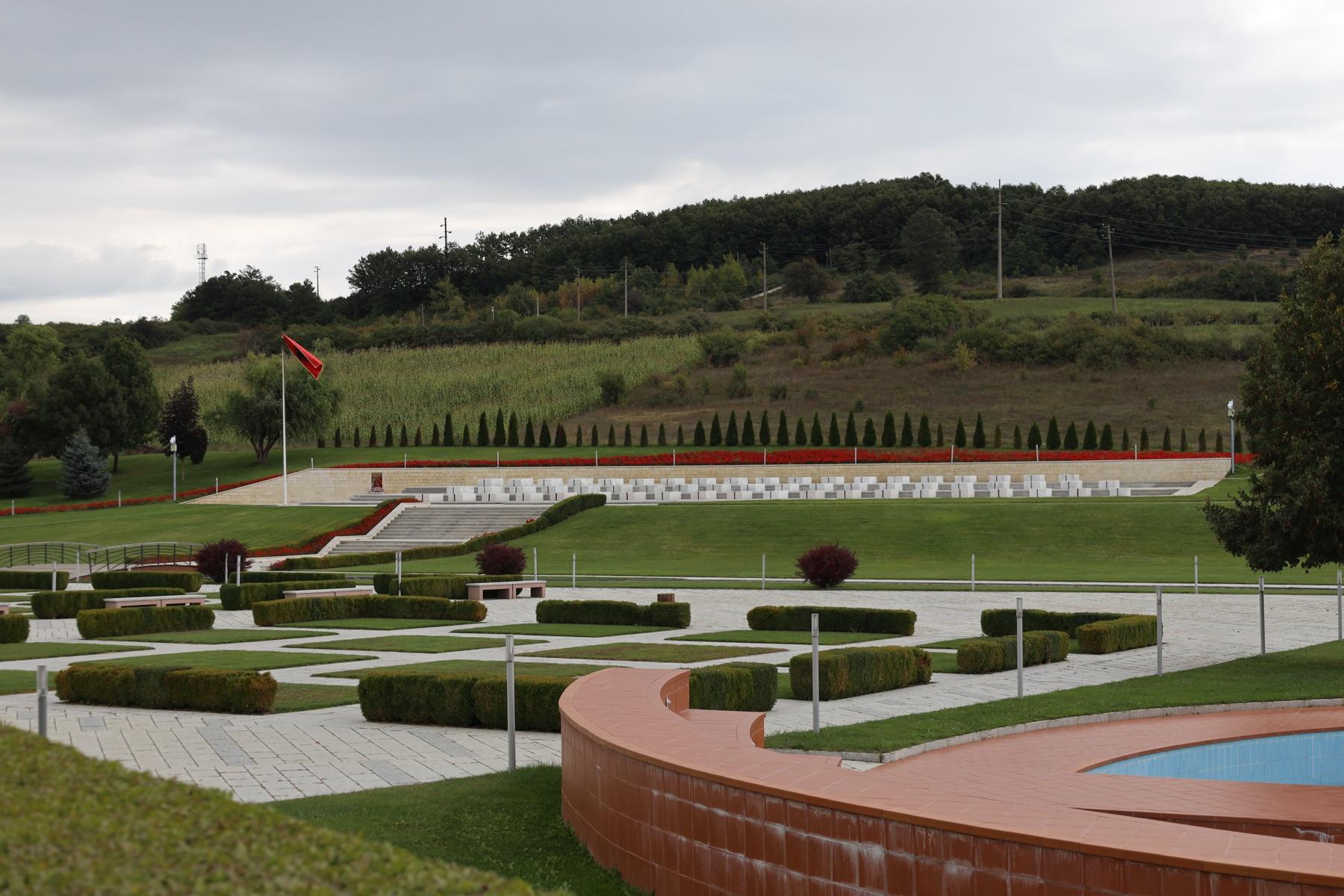
Photo: KushtrimHoti7 (përdorues i Wikimedia Commons) · Fotoja: 21 korrik 2025 · CC BY 4.0 Adem Jashari Memorial Complex, Prekaz
A memorial complex on the site of the Jashari family homes, listed by the Kosovo Agency for the Management of Memorial Complexes.
View on the map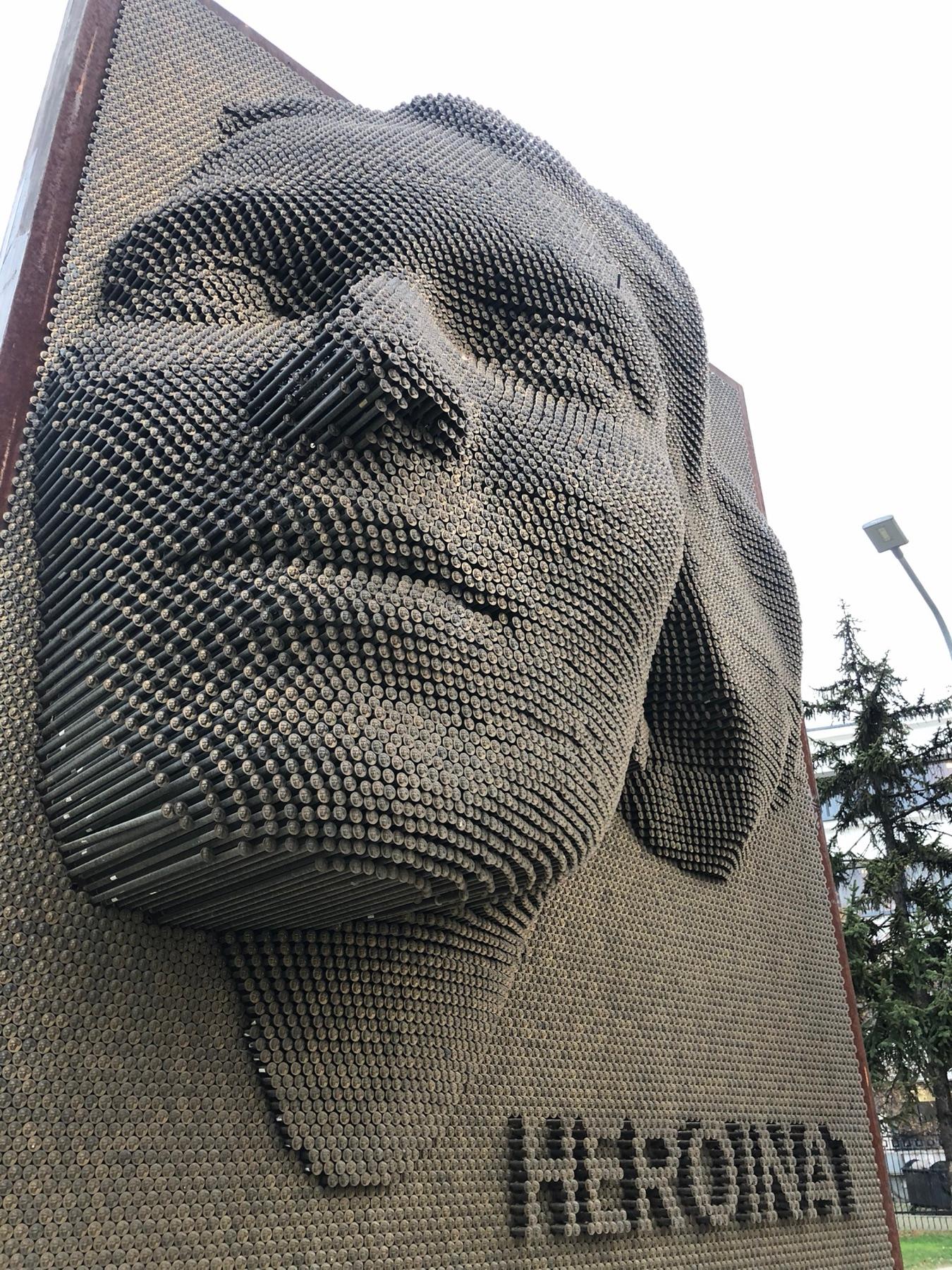
Photo: Mooonswimmer (përdorues i Wikimedia Commons); memoriali: Ilir Blakçori · Fotoja: 6 dhjetor 2022 · CC BY-SA 4.0 (foto); liria e panoramës sipas ligjit të Kosovës për të drejtën e autorit The Heroinat memorial, Prishtina
Unveiled on 12 June 2015; dedicated to women's contribution and sacrifice during the war and to women who survived sexual violence.
View on the map
Reçak Massacre Memorial Complex
A memorial complex for those killed in Reçak on 15 January 1999.
View on the map
Editorial status: Awaiting verificationDrafted from the cited sources; not yet fully reviewed by the editors.
Memory and evidence
The Kosovo Memory Book
The Kosovo Memory Book is a project of the Humanitarian Law Center that aims to record by name every person killed or missing in connection with the war in Kosovo, regardless of ethnicity or of their status as a civilian or a member of an armed force. For each person, the project gathers and cross-checks information from multiple sources — family testimony, documents, reports and institutional data — to avoid duplicates and misidentification.[1]
According to the report HLC published in February 2015, the database recorded 13,535 people killed or missing between 1 January 1998 and 31 December 2000. The figure includes civilians and members of the armed forces of all sides and covers a longer period than the war of 1998–1999. Later HLC pages give updated figures, so every figure should be cited with its year. The Human Rights Data Analysis Group has publicly evaluated the database's methodology and completeness.[1][2]
This archive does not copy the Kosovo Memory Book database. It cites it, explains how it was built and directs readers to it; any future import of records would take place only under a licensing agreement and with accurate attribution.
The missing
More than two decades after the war, the fate of more than 1,500 people missing in connection with the conflict remains unresolved, according to figures published by Kosovo's institutions and by the International Committee of the Red Cross. For their families the question is not historical but daily: where are the remains, and what happened? Figures change as remains are identified, so they must always be cited with their source and date.
The search for the missing is bound up with justice. The postwar discovery of mass graves in Serbia, including at Batajnica near Belgrade, showed that the bodies of many Albanian victims had been moved and concealed. In the Đorđević case, the ICTY found that police structures were involved in concealing bodies. At the same time, Serbian, Roma and other families also continue to search for relatives who went missing during and after the war.[3]
Why we do not publish lists of victims
A list of names looks like a complete record, but without methodology, sources and consent it can contain duplicates, misidentifications or the names of people who are still alive. Such errors cause pain to families and hand arguments to those who wish to deny the crimes.
This archive therefore does not publish long lists of names in order to appear complete. Memorial profiles are added one by one, based on identified sources and, where possible, with the family's consent. A data schema for verified imports exists, but it is used only with a licence, attribution and editorial control.
Memorials
In many places in Kosovo, the memory of the war has become part of public space: at the Memorial Complex in Prekaz, where Adem Jashari and many members of his family were killed in March 1998; at Reçak; and at Krushë e Madhe, where the victims of the killings of March 1999 are commemorated. Village memorial stones and family memorials matter just as much, even when they do not appear on official maps.
In Prishtina, the “Heroinat” memorial, unveiled in 2015, is dedicated to women in the war, including survivors of sexual violence. The archive is building records for memorials with location, date of unveiling, creator and source; they appear on the map under the “Memorials” layer only once the data have been verified.
Memory without false equivalence
This archive remembers all civilian victims of the war and of the postwar period, regardless of ethnicity. An Albanian civilian killed during the expulsions of 1999, a Serb farmer killed at Gracko after the war and a Roma family driven from their home all have a name and a right to be remembered.
Remembering everyone does not mean equating responsibility. The scale, organization and responsibility for crimes are established by evidence and, where they exist, by court decisions — not by a need for symbolic balance. Shared memory does not require all histories to be merged into a single narrative; it requires that no name be used against another people.
Notes
- [1]Fondi për të Drejtën Humanitare (HLC, Beograd) dhe Fondi për të Drejtën Humanitare Kosovë. Kosovo Memory Book. https://www.hlc-rdc.org/en/loss-database/kosovo-memory-book/. Accessed 2026-09-16.
- [2]Jule Krüger, Patrick Ball. Evaluation of the Database of the Kosovo Memory Book. 2014-12-10. https://hrdag.org/wp-content/uploads/2015/04/Evaluation_of_the_Database_KMB-2014.pdf. Accessed 2026-09-16.
- [3]Tribunali Penal Ndërkombëtar për ish-Jugosllavinë (ICTY). Prosecutor v. Vlastimir Đorđević (IT-05-87/1) — faqja e çështjes. IT-05-87/1. https://www.icty.org/en/case/djordjevic. Accessed 2026-09-16.